
We embed AI engineers directly into your organization to solve your most complex operational challenges. Our Forward Deployed Engineers (FDEs) work side-by-side with enterprise clients, building and deploying AI solutions where problems are messy, stakes are high, and environments are rarely “ideal.”
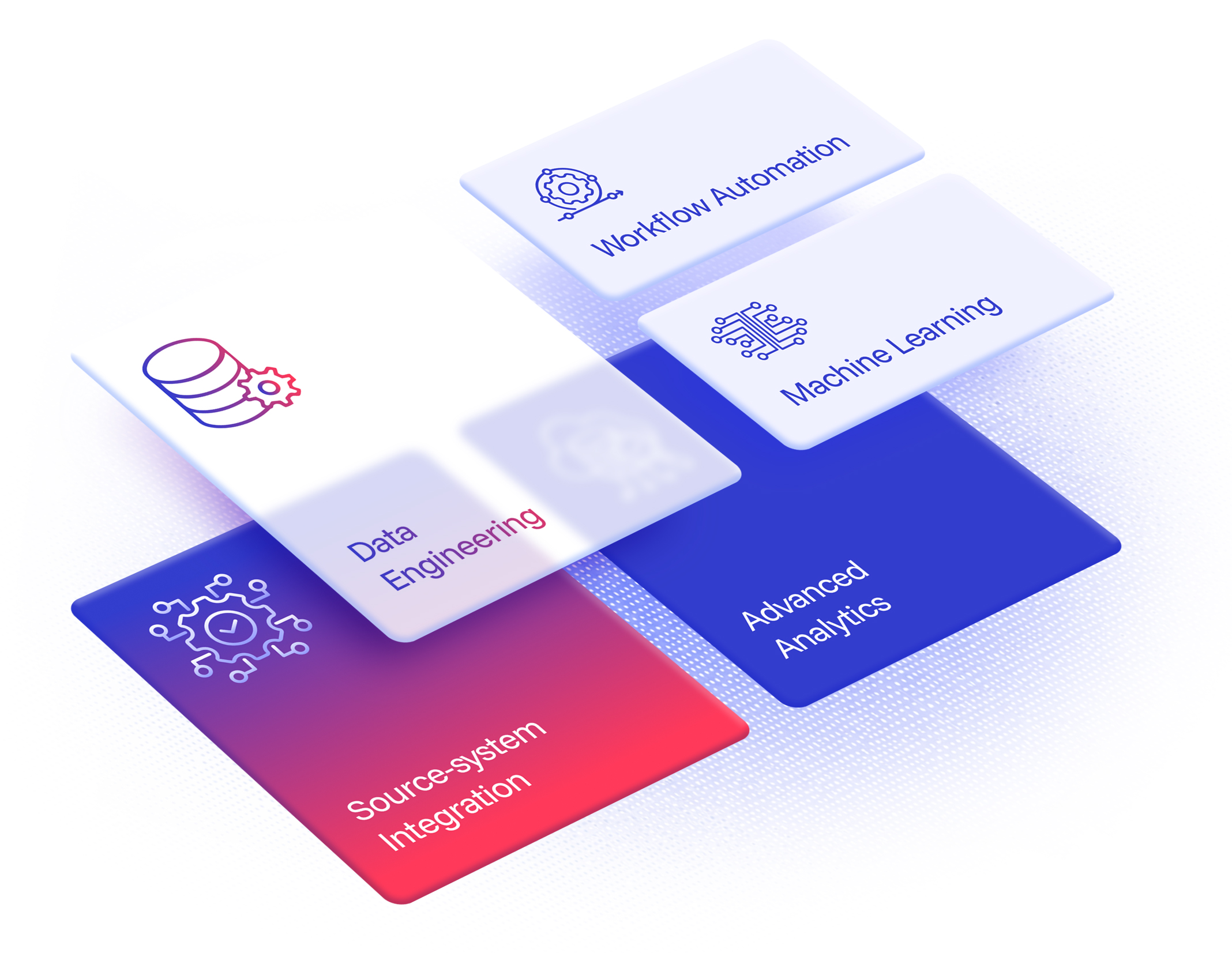
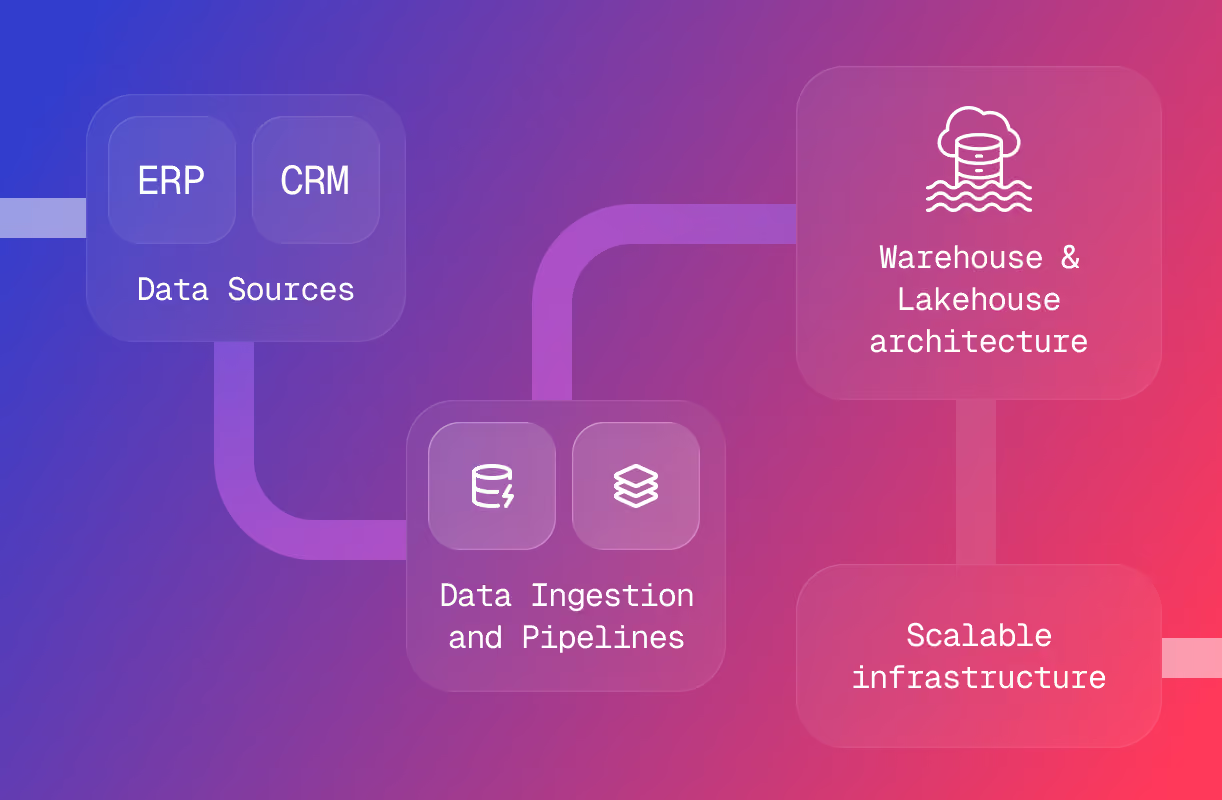
Reliable analytics and AI require reliable data. upsta designs and builds modern data foundations that connect enterprise systems, standardize information flows, improve data quality and create scalable infrastructure for reporting, analytics and automation.
.svg)
Data source integration
Connect data from ERP, CRM, finance, supply chain, logistics, marketing, procurement, warehouse, transportation and operational systems.

Data ingestion and ETL/ELT pipelines
Build automated optimized pipelines to extract, transform, validate and load data across batch, near-real-time and real-time environments.
.svg)
Warehouse and lakehouse architecture
Design scalable data warehouses and lakehouses that support dashboards, analytics, machine learning and enterprise AI applications.
.svg)
Data quality and governance
Implement validation rules, reconciliation checks, data standards, metric definitions and governance controls that improve trust in business data.
.svg)
Data security and lineage
Support role-based access, auditability, lineage tracking and secure data handling for enterprise environments.
.svg)
Analytics-ready data engineering
Transform complex enterprise data into clean, structured and analytics-ready datasets that power reporting, AI and advanced analytics.
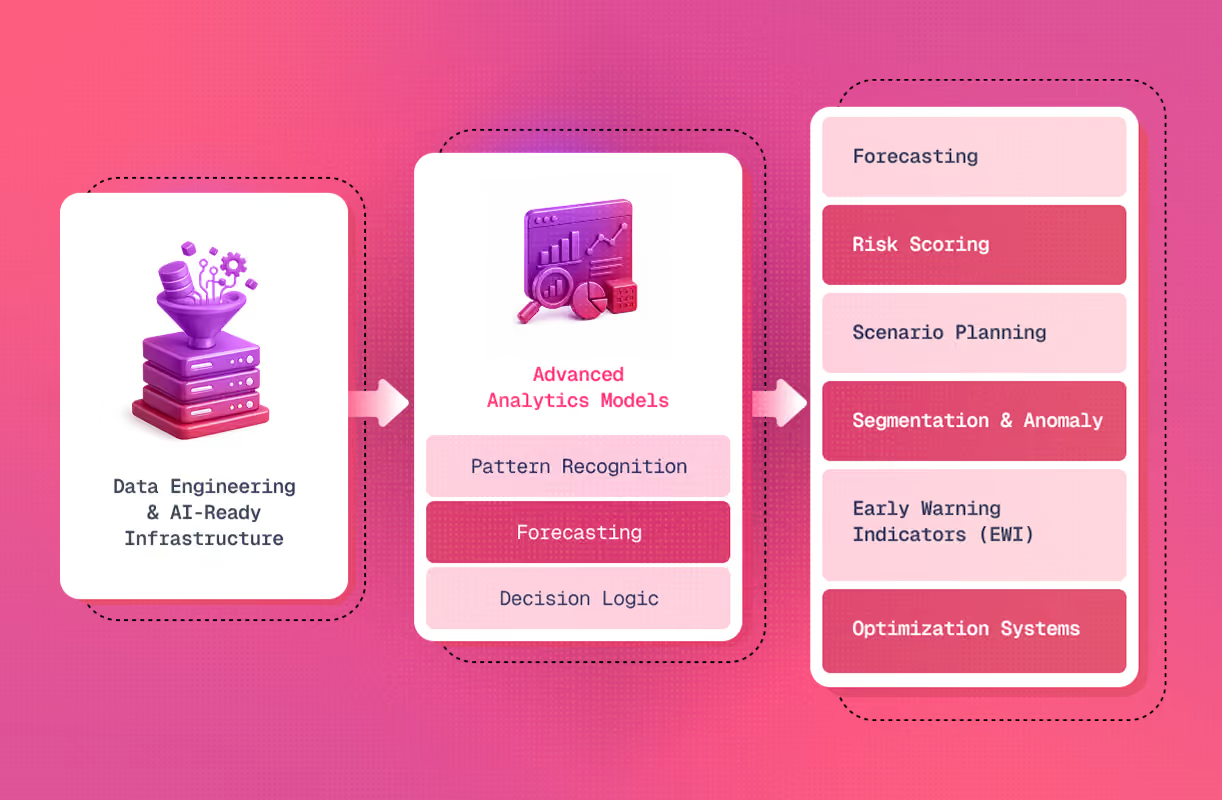
upsta develops advanced analytics models that help organizations identify patterns, predict outcomes, reduce uncertainty and improve decision quality across core business functions. Our analytics work focuses on practical business adoption. We build models that are explainable, measurable and usable within planning, forecasting, risk management and operational decision workflows.
.svg)
Forecasting models
Develop forecasting models for cash flow, demand, revenue, inventory, capacity, collections, workload and operational performance.
.svg)
Risk scoring wokflows
Build scoring models to identify high-risk customers, delayed payments, supplier risks, bad debt exposure, logistics risks and operational exceptions.

Segmentation systems
Classify customers, suppliers, SKUs, invoices, transactions, disputes, campaigns, shipments and operational cases into actionable groups.
.svg)
Anomaly detection
Detect unusual patterns, outliers, billing mismatches, fraud indicators, supply disruptions and performance deviations.
.svg)
Early warning indicators (EWI)
Identify risks early with AI-driven insights to enable proactive decisions and prevent operational and financial disruptions.
.svg)
Optimization systems
Optimize budget allocation, inventory levels, replenishment, routes, transportation loads, resource planning and operational decisions.
.svg)
Scenario planning
Model alternative business scenarios to understand the potential impact of market changes, demand shifts, budget decisions, pricing changes or supply disruptions.
Our AI solutions are built around real business workflows. We help organizations move from AI experimentation to production-ready systems that improve speed, accuracy, productivity and decision support.
.svg)
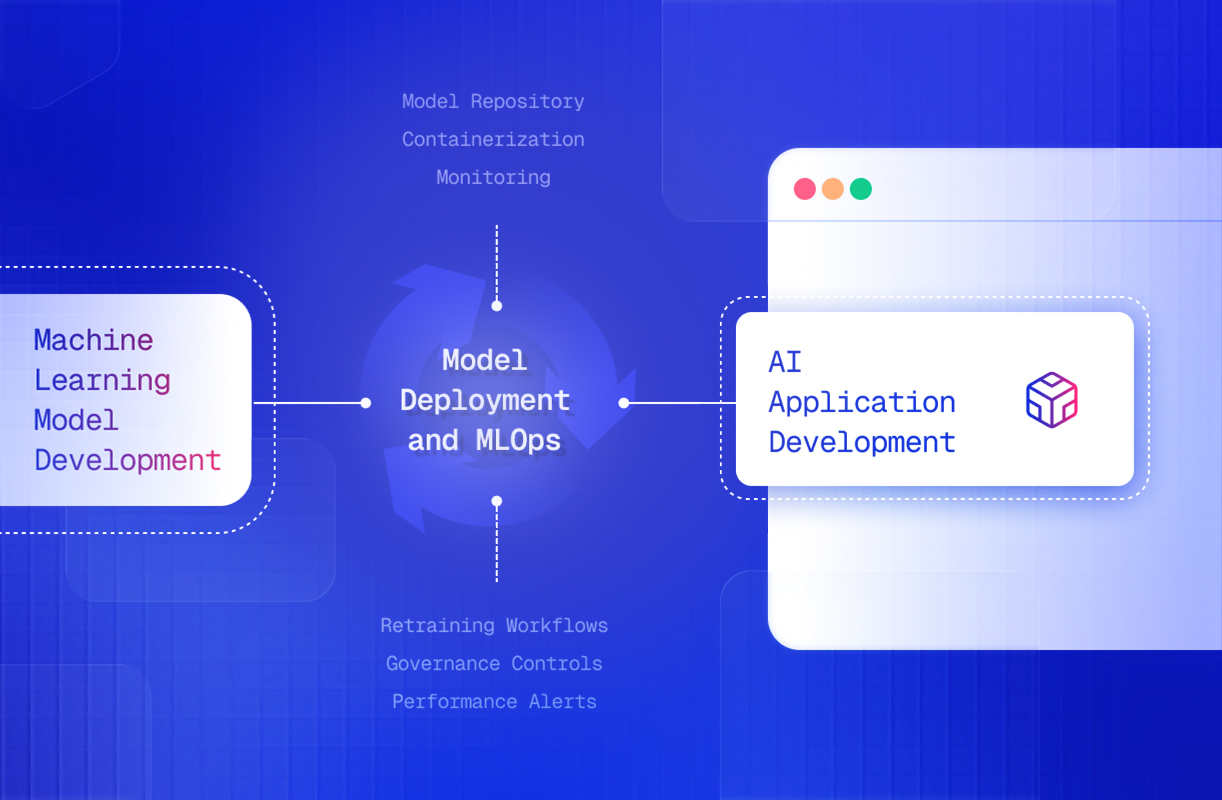
ML model development
Build models for prediction, classification, ranking, clustering, detection, optimization and recommendation use cases.
.svg)
AI application development
Create business-facing AI applications that help teams ask questions, analyze data, review documents, generate reports and initiate workflows.
.svg)
Model deployment and MLOps
Deploy AI models into production with monitoring, versioning, retraining workflows, performance tracking and governance controls.
upsta builds AI agents and intelligent workflow automation systems that observe business conditions, detect exceptions, recommend actions, route approvals, generate communications and support execution within defined governance boundaries.

.svg)
Finance and O2C AI agents
Build agents that monitor receivables, payment behavior, disputes, deductions, credit exposure and collections priorities.
.svg)
Supply chain exception agents
Create agents that detect supplier delays, demand changes, stockouts, inventory risks and operational bottlenecks.
.svg)
Logistics monitoring agents
Track shipment status, ETA risk, route deviations, carrier performance, delivery exceptions and documentation gaps.
.svg)
Automated approval workflows
Route approvals using business rules, AI-generated context, risk signals and escalation logic.
.svg)
Workflow discovery and automation opportunity assessment
Analyze business workflows to identify automation opportunities that improve efficiency, accuracy, and productivity.

